Japan’s Most Baffling Unsolved Crime: The Setagaya Family Murders That Changed the Law Forever
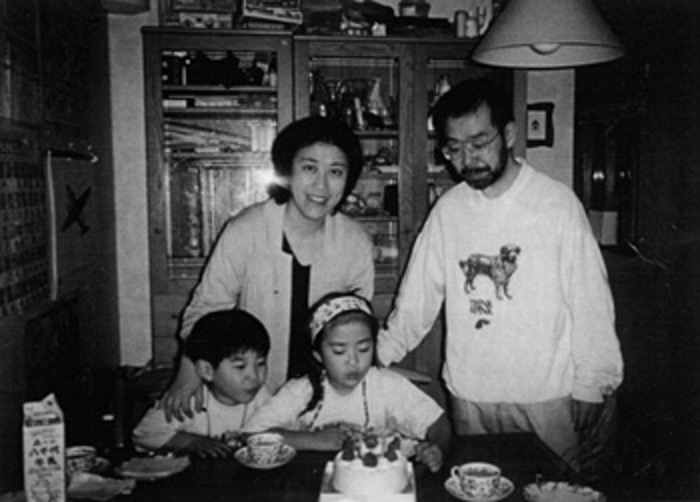
In 2000, a murderer left over 10,000 pieces of evidence at a Japanese home but remains unidentified. This is the story of the Setagaya family murders, a case that reshaped Japan’s legal system and left the nation in shock.
The Unsolvable Mystery That Changed Japan’s Laws
Imagine a crime scene so laden with evidence that it should have been solved in days—but the killer remains free. That’s the unsettling legacy of the Setagaya family murders, a case that exposed flaws in Japan’s legal system and left a lasting mark on its justice framework.
In 2000, a murderer broke into the home of the Miyazawa family, leaving behind DNA, fingerprints, and even a half-eaten ice cream cone. But instead of fleeing, they lingered for hours—using the family’s computer, eating their snacks, and treating their own wounds with their first-aid kit. It was as if they weren’t running from the police but from something else entirely.
The case sparked public outrage. How could someone leave so much evidence and still vanish? The answer was clear: Japan’s statute of limitations allowed murderers to escape prosecution after a certain period. For crimes that carried the death penalty, this clock ticked down to 12 years. But here was a killer who had every opportunity to be caught—and the system let them slip through the cracks.
By 2010, the frustration reached a breaking point. The Setagaya murders weren’t just a tragedy; they were a mirror reflecting Japan’s legal loopholes. “This isn’t justice,” citizens demanded. “If the killer can hide behind a timeline, then what’s the point of any law?” The outcry was so strong that the country abolished the statute of limitations for death penalty crimes. It was a direct response to a case where evidence was overwhelming yet the killer remained free.
What makes this case so haunting? It’s not just the brutality—but the fact that the killer left behind everything: a hip bag with sand from a U.S. military base, a scarf traceable to a dozen buyers, and a computer log showing internet activity after the murders. Yet no name emerged. It’s like the killer dropped a breadcrumb trail… but no one could follow it.
To this day, the Miyazawa home stands untouched, a time capsule of horror. Every year, police distribute flyers near the site, hoping someone will speak up. But the case remains a benchmark for unsolved crimes—not because it’s the worst, but because it’s the most solvable. And that’s what makes it so terrifying.
So, what happens when a killer leaves a trail too long to ignore? In Japan, it changed the law. But in the shadows, the mystery still lingers—waiting for the day someone finally pieces it together.
The Forensic Paradox: 10,000 Clues, No Suspect
The Setagaya family murders are a forensic paradox—a case where the killer left behind a treasure trove of evidence yet vanished into thin air. DNA, fingerprints, and even feces were found at the scene, as if the perpetrator had checked into a hotel and forgotten to leave.
A broken sashimi knife, used to slice fish, was left behind—along with sand from Nevada’s Edwards Air Force Base. It’s like a killer dropped a clue from another planet. investigators have over 10,000 pieces of evidence, yet the killer’s identity remains a ghost.
The clues are bizarre, almost mocking. A hip bag with desert sand from California? A shirt so rare only 130 were made? It’s like the killer left a trail of breadcrumbs… but everyone’s still lost.
And the DNA? It points to a man of mixed heritage with a rare blood type. Yet no match. No face. No name. Just a shadow in a database.
Why? How? The killer had everything to flee—but stayed. They had everything to hide—but left a calling card.
The case isn’t just unsolved. It’s a haunting reminder that sometimes, the more you know, the less you understand.
What if the killer wasn’t hiding? What if they were mocking the system?
Stay with us. The next clue might be closer than you think.
The Killer’s Calm: A Psychopath or Mastermind?
The killer’s behavior defies every trope we’ve ever seen. After slashing a family to pieces, he ate their ice cream, logged onto their laptop, and napped on their couch—a scene straight out of a horror movie. But this isn’t fiction—it’s the chilling reality of the Setagaya family murders.
The killer lingered for hours, devouring four bottles of barley tea, scarfing down melon, and using the family’s first-aid kit to treat his wounds. It’s like the Joker from The Dark Knight took a break to binge-watch Netflix before vanishing into thin air. But instead of chaos, there was eerie calm—a calculated, almost bored detachment.
Experts are split. Some say this is the work of a psychopath, someone who views violence as a game, not a crime. Others whisper about organized crime ties, a hitman who knew the house was a dead zone, a place where no one would hear screams. Then there’s the theory of meticulous planning: every detail points to precision. The killer knew the layout of the house, the location of the sashimi knife, and even the sound of the family’s refrigerator. It’s as if he’d rehearsed this moment, like a method actor preparing for a role.
But here’s the kicker: he left everything. Fingerprints, DNA, a hip bag filled with sand from a U.S. military base, and a scarf that screams “I’m not from here.” It’s like a thief who robbed a bank, then left a 10-page manifesto on the counter. The police have a profile: a young man, Type A blood, mixed heritage, maybe 15–22 years old in 2000. Yet no one matches. It’s the ultimate puzzle—20 years of investigation, mountains of evidence, and zero suspects.
Was he waiting for something? A signal? A plan? Or was he simply unbothered by the idea of being caught? The killer’s calmness feels less like a trait and more like a taunt. He didn’t just commit a crime—he stayed in the house, as if daring the world to find him. And somehow, he succeeded.
The Setagaya case isn’t just about a family’s tragedy. It’s a mirror held up to the limits of justice, a reminder that even with DNA, fingerprints, and a killer’s own footprints, some mysteries refuse to be solved. But the real question isn’t who he was—it’s why he stayed. And that? That’s the part that still gives investigators sleepless nights.
International Clues: From Nevada to Skate Culture
The killer left behind more than just blood and broken knives—they left a trail of contradictions. Sand from the Nevada desert, near Edwards Air Force Base, was found in the hip bag he abandoned. It’s the kind of detail that feels like a breadcrumb dropped by a ghost: a U.S. military installation, thousands of miles from Tokyo, yet somehow tied to this crime.
Was the killer a transient figure, drifting between worlds? Or did they carry a piece of America with them, like a secret? Meanwhile, their shoes—South Korean-made but branded by the British company Slazenger—hint at a life lived in the liminal space between cultures. It’s the same kind of duality you see in a skate park, where global influences collide in a blur of boards and neon.
DNA analysis painted an even stranger picture. The killer’s genetic profile suggested a mix of East Asian and Mediterranean roots—a blend that feels like a puzzle with no obvious pieces. Was this someone born in the shadows of borders, or a traveler who moved between continents without leaving a trace? Theories swirl: a foreign student, an undocumented worker, or even a spy. The evidence is there, but it’s a mosaic with missing corners.
And then there’s the sand again. Not just from Nevada, but also from a Japanese skate park. It’s as if the killer’s life was a paradox—a person who could have been at home in both a military base and a skate spot, where rebellion and order coexist.
The Miyazawa home, now a frozen time capsule, still holds secrets. Every clue feels like a whisper from someone who slipped through the cracks of the world, leaving behind a story that refuses to be solved.
What if the killer wasn’t just one person, but a reflection of a global era where identities blur? The Setagaya family murders aren’t just a crime scene—they’re a map of a life that never quite fit. And somewhere, in the spaces between continents, the truth still waits.
The Decades-Long Hunt: 280,000 Police Actions
Imagine a detective show where every episode is a new clue, but the villain never shows up. That’s the Setagaya family murders—an unsolved case so vast it feels like a police force the size of a small country has been hunting one shadow. Over 280,000 police actions: that’s not just a number; it’s a lifetime of investigations, interviews, and dead ends.
The Miyazawa home, frozen in time, stands as an eerie monument to this mystery. Sealed like a crime scene from a horror movie, it’s a preserved time capsule of chaos. Inside? A trail of clues so detailed, you’d think the killer left a how-to manual for detectives. Yet, no name. No face. Just a ghost in the system.
Why? Because the killer didn’t just leave evidence—they left a puzzle. DNA, fingerprints, a hip bag with sand from a U.S. military base, and a knife that broke during the attack. It’s like someone wrote a confession in invisible ink and then laughed as the whole world tried to read it.
For two decades, Japan’s police have chased this ghost. They’ve interviewed thousands, analyzed every scrap of data, and even changed laws to keep the case alive. But the killer? They’re still out there, slipping through the cracks like a ninja in a spy thriller.
And here’s the kicker: the killer didn’t run. They stayed. They ate ice cream, used the bathroom, and logged onto a computer. It’s the ultimate “I’m not scared of you” move. A psychological twist so cold, it’s like the murderer was daring the world to find them.
So, what’s next? The hunt continues. But with 280,000 actions already taken, the question lingers: how many more will it take to catch a ghost?
The Preserved Crime Scene: A Haunting Monument
The Miyazawa home isn’t just a house. It’s a time capsule, frozen in the moment a family’s lives were shattered. Step inside, and you’re not just walking through a crime scene—you’re standing in the last hours of a quiet suburban existence, where laughter once echoed and a father’s final email was sent at 10:38 PM on a night that would end in blood. The walls still bear the scars of violence. The fridge, now empty, once held ice cream the killer devoured like it was a normal evening. The computer, its screen long dark, logged a connection just hours after the murders—proof the killer treated the house like his own, for a while.
Visitors come not for closure, but for remembrance. The home is preserved exactly as it was when police arrived on December 31, 2000. The same bloodstains. The same broken sashimi knife, its blade still lodged in Mikio’s skull. The same hip bag, its sand from a U.S. military base and a Tokyo skate park, a clue that feels like a taunt. It’s a monument to a family’s legacy, but also to the limits of justice. Here, forensic science has given up. DNA, fingerprints, shoe prints—every detail points to someone, but no name. It’s like watching a movie where the villain’s face is blurred, and the credits roll without a resolution.
The killer’s calmness after the murders is what haunts investigators most. He ate, slept, and used the toilet without flushing. He left behind a trail so rich it should have led to a suspect—yet here we are, two decades later, with the case still open. It’s a paradox that feels like a meme: “If you have all the evidence, why can’t you catch the guy?” The answer? Because the killer wasn’t just hiding. He was inviting the world to look. And somehow, he slipped through the net.
Every year, police set up a command post near the house, handing out flyers. Every year, they come up empty. The case became a catalyst for change, pushing Japan to abolish its statute of limitations for death-penalty crimes. But the home remains, a silent witness to a justice system that failed. It’s not just a crime scene. It’s a mirror, reflecting the gaps between evidence and truth, between technology and human error.
You can almost hear the silence in the rooms. The Miyazawas’ story isn’t just about a family murdered in their home—it’s about a nation grappling with a mystery that refuses to be solved. And as long as the house stands, untouched, the question lingers: Who was the man who walked away, leaving everything but his name?
Conclusion
The Setagaya case remains a haunting reminder of how even the most overwhelming evidence can fail to solve a crime.
Will the killer ever be found? What secrets does the preserved home still hold?
References
- Setagaya family murder - Wikipedia
- The Setagaya Family Murders: Japan's Most Baffling Unsolved Crime
- The Setagaya Family Massacre: Inside Japan’s Most Haunting...
- The Unsolved Setagaya Family Murders | Full True Crime... - YouTube
- Setagaya family murder — The Setagaya Family Murder
- Setagaya Family Murders: Japan’s Most Infamous Unsolved Case