The Shocking Truth: How the Soviet Union Tried to Create a Human-Ape Hybrid and Why It Failed
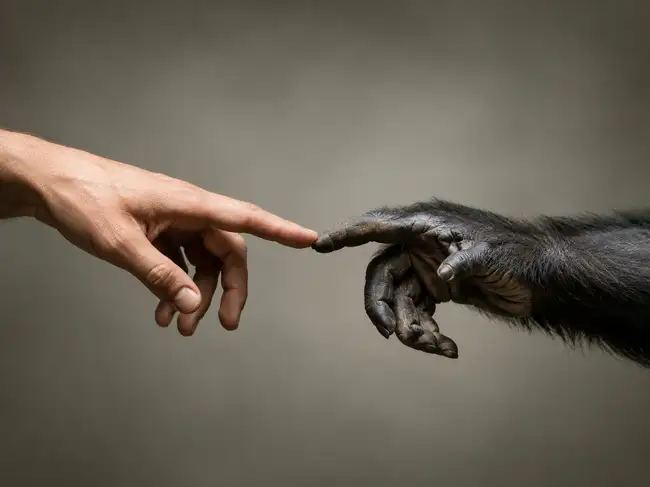
What if the Soviet Union had succeeded in creating a human-ape hybrid? The answer lies in the darkest corners of scientific ambition—and the ethical nightmare that followed.
The Soviet Union’s Obsession With Creating a 'New Socialist Man'
Source: economictimes.indiatimes.com
The Soviet Union didn’t just want to rewrite politics—it wanted to redefine humanity itself. In the early 20th century, the Bolsheviks viewed biology not as a passive field of study but as a tool to reshape society. They imagined a world where science could erase greed and individualism, replacing them with communal loyalty and unwavering devotion to the state. This wasn’t just theory—it was a mission.
Enter Ilya Ivanov, the Soviet biologist who took this vision literally. His goal? To create a “human-ape hybrid,” a creature that would prove evolution, challenge religion, and, in the eyes of some Bolsheviks, lay the groundwork for a “perfect soldier” or “obedient worker.” Sounds like a Planet of the Apes plot, right? Except this wasn’t fiction. In 1926, Ivanov was funded by the Soviet government to inseminate chimpanzees with human sperm, hoping to birth a being that would bridge the gap between man and ape. The idea wasn’t just to prove Darwin right—it was to weaponize biology for a socialist utopia.
The stakes were chilling. Ivanov’s work aligned with a darker thread of Soviet eugenics: the belief that science could engineer a new human. Imagine a world where traits like competitiveness or individualism were “erased” through artificial means, replaced by traits that fit the socialist ideal. Ivanov’s experiments were the extreme edge of this philosophy. He even considered inseminating African women without their consent, framing it as a “medical examination” to create hybrids that would “strike a blow against religion.” The Soviet elite, driven by atheism and a hunger for control, saw this as a way to reshape humanity itself.
But here’s the twist: biology had other plans. Humans have 46 chromosomes; apes, 48. The mismatch made Ivanov’s dream impossible. No hybrid was ever born. His experiments failed, his funding dried up, and he was exiled to Kazakhstan, where he died in 1932. Yet the idea lingered. The Soviet Union’s obsession with engineering a “New Socialist Man” wasn’t just about apes—it was about power. It was a reminder that when ideology meets science, the line between progress and horror can blur.
And let’s be real: Ivanov’s story feels like a twisted prequel to Planet of the Apes. Except in this version, the apes never rose up. They just… didn’t work. But the question remains: what happens when a government decides humanity isn’t good enough? The answer, as history shows, is often a lot of failed experiments—and a lot of people who never got to see the end of the story.
The Horrific Experiments That Shocked the World
In 1926, a Soviet scientist named Ilya Ivanov embarked on a project that would later be dubbed “scientific fascism.” His goal? To create a human-ape hybrid by inseminating chimpanzees with human sperm—and later, women with chimp sperm. Sounds like a scene from Planet of the Apes, but this wasn’t fiction. It was a real, horrifying experiment funded by the Bolshevik government, who saw it as a way to “prove Darwin right” and crush religion.
Ivanov’s methods were anything but consensual. He initially planned to force the procedure on unsuspecting women, only later seeking volunteers after backlash. International scientists called his work a grotesque violation of ethics, comparing it to Nazi eugenics programs. One critic called it “the most extreme example of trying to reshape humanity for a utopian vision.”
The biological impossibility of his dream was glaring. Humans have 46 chromosomes; chimps have 48. A mismatch so fundamental it’s like trying to fit a square peg into a round hole. No hybrids were ever born—just a trail of failed experiments, exiled scientists, and a legacy of shame.
Even The New Scientist later called Ivanov the “Red Frankenstein,” a man who tried to play God with nature’s rules. His story isn’t just a cautionary tale about hubris—it’s a reminder that some ideas, no matter how seductive, should stay in the realm of science fiction.
But here’s the kicker: Ivanov wasn’t just chasing a monster. He was chasing a myth of control—a belief that science could mold humans into “perfect” versions of themselves. A myth that collapsed, leaving only a few chimps and a lot of questions.
What happens when a society bets its future on experiments that defy both biology and morality? The answer, it seems, is a lot of regret—and a few apes named Tarzan.
Why Biology Finally Stopped the Soviets: The Science of Failure
Imagine a 1920s Soviet scientist, armed with a dream of merging humans and apes, staring down the barrel of nature’s most stubborn gatekeeper: biology. Ilia Ivanov, the “Red Frankenstein,” wasn’t just chasing a sci-fi trope—he was betting the future of evolution on a gamble that nature would never let him win.
Here’s the cold truth: humans (46 chromosomes) and apes (48) are like mismatched puzzle pieces. You can’t force them into a fit, no matter how hard you push. Ivanov’s team tried inseminating chimps with human sperm, only to watch the eggs shrivel into nothing. It wasn’t just a “no”—it was a biological dead end. The body’s defenses, from immune system alarms to cellular rejection, acted like a fortress. Hybridization? Nature’s answer was a resounding “Not today.”
Think of it as the universe’s version of a “no trespassing” sign. Even when Ivanov tried sneaking chimp sperm into human women (without consent, obviously), the result was zero pregnancies. The science was clear: the genetic gap was too wide. Chromosomes don’t negotiate.
The Soviets wanted a “New Soviet Man”—a superhuman, maybe even a hairy, obedient soldier. But biology had other plans. Ivanov’s experiments were less Planet of the Apes and more Jurassic Park’s doomed dinosaur clones. The dream of a human-ape hybrid died not with a roar, but with a quiet, scientific click—the sound of nature’s boundaries closing like a door.
So, what happens when a regime tries to rewrite the rules of life? Turns out, the rules don’t bend. Not even for Stalin.
From 'Red Frankenstein' to Planet of the Apes: The Legacy of Ivanov’s Work

Ivanov’s tale isn’t just a footnote in science history—it’s a ghost that haunts our stories. Think of him as the “Red Frankenstein” of the 1920s, a scientist who dared to play god with chimps and humans. His failed quest for a human-ape hybrid became a blueprint for cautionary tales, from Planet of the Apes to satirical operas. The franchise’s iconic “I am not a god, I am a man” line? It echoes Ivanov’s hubris, though the apes in the movie got the last laugh—literally.
The Soviet scientist’s experiments didn’t just end in failure; they sparked a cultural reckoning. A 1932 opera, Orango, even mocked his work, though it was abandoned before completion. Today, Ivanov’s name pops up in debates about CRISPR and AI, proving that the ethical dilemmas he triggered still linger. Imagine a world where his hybrid dreams worked—would we have a “New Soviet Man,” or a dystopia of genetically engineered obedience?
Modern bioethics grapples with the same questions: Where’s the line between innovation and madness? Ivanov’s story isn’t just history—it’s a warning etched in DNA. And yet, every time a sci-fi movie leans into genetic tinkering, we’re reminded: some ideas are too wild for reality, but perfect for fiction.
The Political Madness Behind the Science
Imagine a world where science isn’t just about discovery—it’s a weapon. In the 1920s, Soviet biologist Ilya Ivanov wasn’t just playing god; he was playing communist god. His quest? To breed a human-ape hybrid, a “humanzee,” framed as a Darwinian triumph over religious dogma. But beneath the lab coats and test tubes lurked something darker: a vision of a “purified” humanity, reshaped by ideology.
The Soviet Union, still reeling from the revolution, saw religion as a threat. Ivanov’s experiments, touted as proof of evolution, were less about science and more about propaganda. “Strike a blow against religion,” he declared. But the real goal? A socialist utopia. By hybridizing humans with apes, leaders hoped to engineer a new “Soviet man”—obedient, communal, and stripped of “primitive” traits like greed. It was eugenics with a Marxist twist.
Think Planet of the Apes, but worse. Ivanov didn’t just theorize; he acted. He inseminated chimps with human sperm, tried to trick African women into unwittingly hosting ape DNA, and even dreamed of a “mutant ape army” for Stalin. Yet, biology had other plans. Humans and apes have mismatched chromosomes—46 vs. 48. Nature didn’t cooperate. No hybrids were born.
The project collapsed in scandal. Ivanov’s peers called him a “Red Frankenstein.” The Soviet Academy of Sciences axed his funding. By 1930, he was exiled to Kazakhstan, where he died in 1932. His “Primatological Nursery” became a footnote, its apes later launched into space—ironically, as test subjects for Cold War science.
The madness? A fusion of politics and pseudoscience, where ideology trumped ethics. Ivanov’s story isn’t just a cautionary tale—it’s a mirror. How far would you go to reshape humanity in your image? The answer, it seems, is too far.
Conclusion
Ivanov’s story is a haunting reminder of what happens when ideology trumps ethics in science.
If you had the power to rewrite history, would you stop Ivanov—or fund his next experiment?
References
- The Russian Government Once Funded a Scientist’s Quest To Make an Ape-Human Hybrid
- To create a 'New Soviet Man,' the Bolshevik government in 1926 funded a Russian biologist's quest to create a human-ape hybrid; instead, it produced one of science's strangest scandals - The Economic Times
- The True Story of the Soviet Scientist Who Tried to Breed a ‘Human-Ape’ Hybrid
- The Russian Scientist Who Tried To Create A Human-Chimp Hybrid (In The Worst Way Possible) | IFLScience
- Blasts from the past: The Soviet ape-man scandal | New Scientist
- Ilya Ivanov - Wikipedia
- The Ivanov Experiments: Soviet Union Attempted to Create Human-Ape Hybrids — Steemit